New & Noteworthy
In Memoriam: David Botstein
March 02, 2026
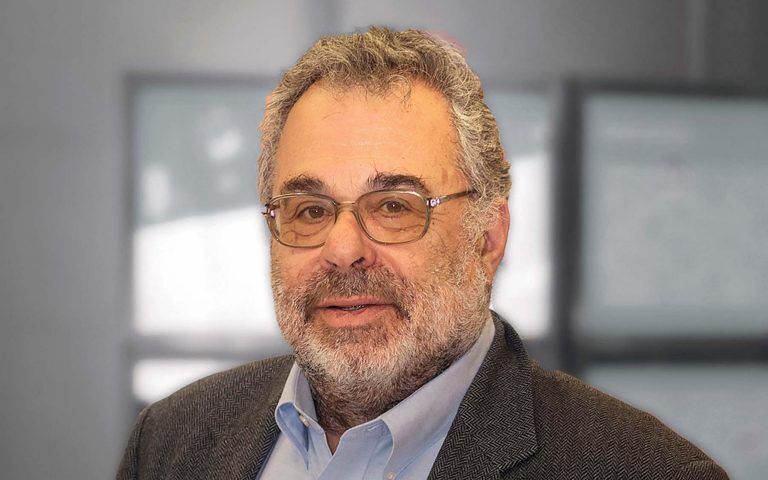
We are deeply saddened to share the news of the passing of David Botstein, a towering figure in modern genetics and a foundational force behind the Saccharomyces Genome Database (SGD). SGD began in the early 1990s in David’s lab at Stanford University, and his vision for a rigorously curated, community-centered resource set the course for what SGD is today. His belief that carefully organized, interoperable data would accelerate discovery has guided our work from the start and continues to shape our mission.
David’s scientific impact is vast and enduring. He co-authored the landmark 1980 paper introducing the use of restriction fragment length polymorphisms (RFLPs) for human genetic mapping, a conceptual breakthrough that opened the door to finding disease genes well before whole-genome sequencing was possible. He later helped usher in the era of genome-wide expression analysis, demonstrating how systematic measurement and clustering of gene expression could illuminate cellular pathways, regulatory programs, and physiological states. Across decades, his work, leadership, and mentorship helped define the fields of genetics and genomics.
Yeast, and the global community that studies it, benefited enormously from David’s clarity of thought and sense of purpose. He championed model organisms as engines of insight, insisting that fundamental principles uncovered in yeast could illuminate biology more broadly. From the beginning, he advocated for standards, reproducibility, and open data, principles that remain at the heart of SGD. Many of the practices we still rely on, including careful literature-based curation, genotype-to-phenotype integration, and community engagement, grew directly from his vision.
David was also a gifted mentor and collaborator. He trained and inspired generations of scientists, curators, engineers, and students, encouraging bold ideas and rigorous tests of those ideas. Those who worked with him remember his incisive questions, his generosity with time and credit, and his unwavering commitment to getting the science right. His influence extends through the many people he mentored and the communities and institutes he helped build at MIT, Stanford, Princeton, and beyond.
To the SGD team, David’s legacy is personal. We are honored to steward a resource he helped bring into being, and we remain committed to the principles he championed: accuracy, openness, and service to the community. As we continue to evolve SGD in a multi-omic, data-rich era, we do so with gratitude for the foundation he laid and the example he set.
We extend our deepest condolences to David’s family, friends, colleagues, and the many people around the world who learned from and were inspired by him.
Categories: News and Views
Fpt1p is a negative regulator of RNA Polymerase III embedded in the tDNA chromatin-proteome
November 27, 2023
Gene transcription is facilitated by RNA polymerase enzyme complexes that collaborate with transcription factors, repressors, chromatin remodelers, and other cellular factors. RNA Polymerase III (RNAPIII) mainly transcribes short DNA fragments called tDNAs, that code for transfer-RNAs (tRNAs). In repressive conditions, tDNA transcription is repressed by the well-characterized protein Maf1. A new study by Van Breugel et al., recently published in Molecular Cell, identified Fpt1p (YKR011C) as an additional regulator of RNAPIII in S. cerevisiae.
By using Epi-Decoder, a technique based on synthetic genetic array (SGA), chromatin immunoprecipitation and DNA-barcode sequencing, the local chromatin-proteome of a single tDNA was decoded in active and repressive conditions. The authors found major reprogramming of the core RNAPIII transcription machinery and other known chromatin-binding proteins. Surprisingly, they found the protein Ykr011c to be enriched in the tDNA chromatin-proteome, especially under repressive conditions, prompting the authors to rename the gene FPT1 (Factor in the Proteome of tDNAs number 1).

Following up on the Epi-Decoder finding, genome-wide sequencing methods such as ChIP-seq and ChIP-exo revealed that Fpt1p uniquely binds RNAPIII-regulated genes. Using the anchor away system to conditionally deplete core RNAPIII transcription factors from the nucleus, Fpt1 binding to tRNA genes was found to require both TFIIIB and TFIIIC but not RNAPIII or ongoing transcription. tRNA genes have been described to differentially respond to repressive signals but gene-specific regulatory mechanisms have largely remained elusive. Looking at Fpt1p, Van Breugel et al. found a correlation between tDNA responsiveness to repressive signals and Fpt1p occupancy, suggesting a negative regulatory role for Fpt1p. Substantiating these results, FPT1 knockout strains showed increased occupancy of RNAPIII and TFIIIB at tRNA genes, while TFIIIC occupancy decreased. These outcomes point towards a role for Fpt1p in promoting eviction of RNAPIII upon repressive signals.
In summary, taking advantage of multiple yeast genetic approaches, Van Breugel et al. found that the previously uncharacterized protein Fpt1 is a bona fide RNAPIII regulator in S. cerevisiae. Their research emphasizes the importance of not overlooking uncharacterized proteins, as they may possess alternative regulatory roles that could change our views on fundamental cellular processes.
Text and image provided by Marlize van Breugel, MSc.
Categories: News and Views
Tags: RNA polymerase III, Saccharomyces cerevisiae
Alliance of Genome Resources Opens Door with Version 1.0 Release
November 03, 2017
The Alliance of Genome Resources (the Alliance) announces the release of the Alliance of Genome Resources website 1.0 – providing unified access to comparative genetics and genomics data from the Alliance data resources (www.alliancegenome.org). The focus of the Alliance is to facilitate the use of these data towards better understanding of human biology and disease.

The Gene Ontology Consortium and six Model Organism Databases have joined together to form the Alliance of Genome Resources.
The Alliance brings together the efforts of the major National Institutes of Health (NIH) National Human Genome Research Institute (NHGRI)-funded Model Organism Database (MOD) groups, and the Gene Ontology (GO) Consortium, in a synergistic integration of expertly-curated information about the functioning of cellular systems.
The MODs were created in the early days of the Human Genome Project in support of the major experimental models for human biology. The MODs currently included in the Alliance are the Saccharomyces Genome Database (SGD), FlyBase, WormBase, Mouse Genome Database (MGD), Rat Genome Database (RGD), and Zebrafish Information Network (ZFIN). In addition, the Alliance includes the Gene Ontology (GO) Consortium. Now these groups will merge key activities and data representations, coordinating data retrieval and analysis, within a comparative perspective. Other MODs and related resources will be added to the Alliance going forward.
As part of this initial release, Alliance working groups have focused on the ability to easily access pages that summarize details of genes and diseases, with extensive representation of orthology data, and with access to multi-track JBrowse capabilities primarily for visualization of sequence data. Users recover gene details, functional information, and disease associations within a comparative perspective. As the integration of the MOD and GO teams progress with inclusion of additional data, the vision going forward includes the incorporation of other model organism information resources and other bioinformatic nodes within a common data platform, facilitating data recovery, analysis, and integration.
Categories: News and Views
Tags: Alliance of Genome Resources
A Nobel Prize for Work in Yeast. Again!
October 03, 2016

Dr. Yoshinori Ohsumi has won the 2016 Nobel Prize in Physiology or Medicine for his groundbreaking work on autophagy in yeast. Image from freethoughtblogs.com.
Dr. Yoshinori Ohsumi has won the 2016 Nobel Prize in Physiology or Medicine for his groundbreaking work on autophagy in yeast. This is the process whereby cells recycle their worn out parts or where a cell, like Mobius, the snake eating its own tail, eats less essential bits of itself to stay alive during times of starvation. Think Scarlett O’Hara using her drapes as a dress in Gone With the Wind (or Carol Burnett’s hilarious parody).
Like many, many Nobel Prizes in the past, Ohsumi’s work uncovered basic biological properties using a model organism. In this case he used our favorite lab workhorse, the yeast Saccharomyces cerevisiae, to piece together the steps involved in the recycling of a cell’s own internal structures.
And like many other basic biological studies, this one has important medical applications. In this case the two most obvious are chemotherapy resistance and amyloid-β aggregation in Alzheimer’s disease, but it isn’t restricted to just these two. For example, a specialized form of autophagy that targets damaged mitochondria, mitophagy, may not be working well in people with Parkinson’s disease.
The key to Ohsumi’s work was finding a way to disrupt this process in yeast so that he could find the important genes underlying autophagy using the awesome power of yeast genetics (#APOYG!). It turns out that this is trickier than it might seem because yeast and their autophagosomes, the little vesicles that surround and encase the bits to be degraded, are very small and so hard to see. In fact, they are so small that there was some question about whether yeast even had this process!
If yeast did, then it would take place in the vacuole, the recycling center in yeast. The equivalent organelle in people is the lysosome.
To see if autophagy happens in yeast, Ohsumi starved yeast that had vacuoles but couldn’t digest anything. The idea was that there would be a buildup of autophagosomes in the vacuole because the yeast would be desperately trying to eat itself but had no way to digest what it ate. He indeed saw that these poor yeast developed huge vacuoles bloated with autophagosomes.
Dr. Yoshinori Ohsumi now had the makings of a yeast screen! “All” he had to do was to look for mutants that didn’t form giant vacuoles under these conditions with the logic being that if you knocked out autophagy, you wouldn’t get a buildup of autophagosomes.
The rest, as they say, is history. Ohsumi and his lab managed to tease out the subtleties of this vital cellular process using good old baker’s yeast. What other nuggets of knowledge about ourselves will we pry out of this most useful of eukaryotes? I can’t wait to see what it reveals about us next!
Other Nobel Prizes have been awarded in recent years for work in yeast:
- Leland H. Hartwell, R. Timothy (Tim) Hunt, and Paul M. Nurse won the 2001 Nobel Prize in Physiology or Medicine for their discoveries of “key regulators of the cell cycle”.
- Roger D. Kornberg won the 2006 Nobel Prize in Chemistry “for his studies of the molecular basis of eukaryotic transcription”.
- Elizabeth H. Blackburn, Carol W. Greider, and Jack W. Szostak won the 2009 Nobel Prize in Physiology or Medicine “for the discovery of how chromosomes are protected by telomeres and the enzyme telomerase”.
- James E. Rothman, Randy W. Schekman, and Thomas C. Südhof won the 2013 Nobel Prize in Physiology or Medicine “for their discoveries of machinery regulating vesicle traffic, a major transport system in our cells”.
by Barry Starr, Ph.D., Director of Outreach Activities, Stanford Genetics
Categories: News and Views, Yeast and Human Disease
Support Model Organism Databases!
June 22, 2016

Image from http://biology.uiowa.edu/.
Model Organisms such as yeast, worm, fly, fish, and mouse are key drivers of biological research, providing experimental systems that yield insights into human biology and health. Model Organism Databases (MODs) enable researchers all over the world to uncover basic, conserved biological mechanisms relevant to new medical therapies. These discoveries have been recognized by many Nobel Prizes over the last decades.
NHGRI/NIH has recently advanced a plan in which the MODs will be integrated into a single combined database, along with a 30% reduction in funding for each MOD (see also these Nature and Science news stories). While integration presents advantages, the funding cut will cripple core functions such as high quality literature curation and genome annotation, degrading the utility of the MODs.
Leaders of several Model Organism communities, working with the Genetics Society of America (GSA), have come together to write a Statement of Support for the MODs, and to urge the NIH to revise its proposal. We ask all scientists who value the community-specific nature of the MODs to sign this ‘open letter’. The letter, along with all signatures, will be presented to NIH Director Francis Collins at a GSA-organized meeting on July 14, 2016 during The Allied Genetics Conference in Orlando. We urge you to add your name, and to spread the word to all researchers who value the MODs.
In other words, sign this letter!

Categories: Announcements, News and Views, Yeast and Human Disease
Help SGD by Taking a Brief Survey
October 21, 2014
If you could wave a magic wand and change something about SGD, what would it be? We want to know!
We need your feedback to make SGD even more useful to the biomedical research community. Which features are most important to you and how could they be improved? Which new data, tools, or resources will you need from SGD over the next few years as your research evolves?
We would greatly appreciate your thoughts on how we can serve you better. It will take just a few minutes to take our survey. Click the button below, or access the survey from the button in our website header. Thank you in advance for your time.

Categories: News and Views
Look for SGD at the Yeast Genetics Meeting in Seattle!
July 23, 2014
SGD staff will be attending the GSA Yeast Genetics Meeting in Seattle, July 29 – August 2, 2014 en force! We will be hosting a Workshop, Posters, and an Exhibit Table. The Workshop, “Computational Tools at SGD,” is on Thursday, July 31 at 1:30 PM in Kane Hall, Room 220. We will be discussing our powerful search tool, YeastMine, what’s new in the realm of Strains and Sequences, and new displays in SGD. Bring your questions and comments – we love feedback!
Follow @yeastgenome and #YEAST14 on Twitter for the latest research being presented at YGM.
Find these SGD staff members, as well as those presenting posters, at the Workshop and the Exhibit table:</p?
 Maria Costanzo Workshop Speaker |
 Rob Nash Workshop Speaker |
 Ben Hitz |
Workshop: “Computational Tools at SGD”
Thursday, July 31, 1:30 – 3:00 PM
Kane Hall, Room 220
Featured topics: YeastMine (our powerful search tool), Sequences and Strains update, New data displays at SGD
Posters
In addition to the Workshop, SGD curators will present 4 posters – please stop by and chat with us.
| Poster | Date & Time | Poster Title | Presenter |
|---|---|---|---|
| 318C | Friday, August 1 7:30 – 8:30 PM HUB Grand Ballroom |
Defining the transcriptome of Saccharomyces cerevisiae |  Edith Wong |
| 387C | Friday, August 1 8:30 – 9:30 PM HUB Grand Ballroom |
Yeast – it simply has a lot to say about human disease |  Selina Dwight |
| 411C | Friday, August 1 8:30 – 9:30 PM HUB Grand Ballroom |
Transcriptional regulation and protein complexes in budding yeast |  Stacia Engel |
| 459C | Friday, August 1 8:30 – 9:30 PM HUB Grand Ballroom |
Staying current and modern: Overhauling an actively-used model organism database website |  Kelley Paskov |
Exhibit Table
SGD will also have an exhibit table at the YGM. Come by to take a spin on our site, receive a prize for taking a survey, learn about various features of the database, and provide us with feedback as to what we can do to improve SGD. Look for us wearing our SuperBud fleece jackets, and feel free to flag any of us down!
Categories: Conferences, News and Views
Professor Jure Piskur, Ph.D. (1960 – 2014)
June 04, 2014

Jure Piskur, 1960-2014
Dr. Jure Piskur, Professor and Carlsberg Foundation Chair in Molecular Food Microbiology at Lund University, sadly passed away on May 18, 2014. Dr. Piskur worked on yeast early in his scientific career, including postdoctoral research in yeast molecular biology at Carlsberg Brewery. From there, he studied Drosophila genes involved in the metabolism of nucleic acid precursors as well as yeast biodiversity and mitochondrial genetics. Most recently, his research focused on genes involved in the metabolism of nucleic acid precursors and “the evolution and molecular mechanisms which reshaped the modern enzymes and yeast genomes.” Dr. Piskur published many scientific papers, many of them represented in SGD. He was also a FEMS Microbiology Reviews Editor and Yeast Research Editorial Board Member. For more information on Dr. Piskur, please view his Lund University profile page.
Categories: News and Views
Yeast Researchers Take the Lion’s Share of GSA 2014 Awards
February 03, 2014
Congratulations to fellow yeasties Angelika Amon, Charlie Boone, and Robin Wright for winning three of the five annual Genetics Society of America awards for 2014! Just another confirmation that the awesome power of yeast genetics attracts excellent researchers…
Angelika Amon, of MIT and the Howard Hughes Medical Institute, has been awarded the Genetics Society of America Medal for outstanding contributions to the field of genetics during the past 15 years. Charlie Boone, of the University of Toronto and a longstanding member of SGD’s Scientific Advisory Board, received the Edward Novitski Prize for his extraordinary level of creativity and intellectual ingenuity in solving significant problems in genetics research. Robin Wright, of the University of Minnesota, has been awarded the Elizabeth W. Jones Award for Excellence in Education, which recognizes significant and sustained impact in genetics education. Find full details about the awards and recipients at the GSA website.
Categories: News and Views
Web Primer Redesign Survey
January 27, 2014
Have you used SGD’s Web Primer tool? This tool allows you to enter the name of a yeast gene, or any DNA sequence, and design primers for sequencing or PCR. We are planning to redesign this tool and we need to hear from you to make sure that the next version meets your needs. Please let us know how you use the tool and which features are most useful by filling out the Web Primer Survey. We appreciate your feedback!
Categories: News and Views